
Jesus describes the end of Jerusalem offering a parable.
Luke 21:30 When they now shoot forth, ye see and know of your own selves that summer is now nigh at hand.
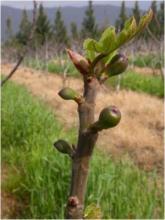
Luke 21:30 When they sprout leaves, you can see for yourselves and know that summer is near.
When they sprout, seeing from them immediately, you know that immediately the harvest is near.
Jesus refers to the coming destruction here as a "harvest", but the English translations translate the noun as "summer".
The word translated as "now" in the KJV and left out of the NIV primarily means "at that time".
We will see when the time is near.
When they now shoot forth, ye see(WF) and know of(CW) your own selves that (MW) summer is now nigh at hand.
- WF -- Wrong Form - This is not an active verb but a participle, a verbal adjective, "seeing".
- CW - Confusing Word -- The "of" does not capture the word's specific meaning.
- MW - Missing Word -- The word "the/this" before "summer" is not shown in the English translation.
- IW - Inserted Word-- The "leaves" doesn't exist in the source.
- IW - Inserted Word-- The "can" doesn't exist in the source.
- WF -- Wrong Form - This is not an active verb but a participle, a verbal adjective, "seeing".
- CW - Confusing Word -- The "for" does not capture the word's specific meaning.
- MW - Missing Word -- The word "the/this" before "summer" is not shown in the English translation.
- MW - Missing Word -- The word "now" after "is" is not shown in the English translation.
When -- The Greek word translated as "when" introduces a phrase that explains a certain condition so "whenever" or "since".
now -- "Now" is a Greek adverb meaning "by this time", "forthwith", "after", "immediately" and "now". It means proximity in time, but also place.
they -- This is from the third-person, plural form of the verb.
shoot -- "Shoot forth" is a Greek verb that Jesus only uses here. It means to means "throw or lay before", "send forth", "emit" and several other things. It is a form of the common word Jesus used that is translated as "cast out" but which is closer to our "toss". It is also a play on the Greek word for "parable", which Jesus uses in the other versions of this verse (Matthew 24:32 and Mark 13:28) but which this Gospel uses as an introduction, not part of Jesus's words.
forth - This completes the meaning of the verb. It is from the prefix.
ye -- This is from the second-person, plural form of the verb.
see -- (WF) The verb translated as "see" means "to see", "to look to", "to look like", "to beware" and "to look for". The form is not an active verb, but an adjective "seeing". This is not an active verb but a participle, a verbal adjective, "seeing".
and -- There is no "and" here. It is added because the KJV translators translated the previous verb as active, when it is not.
know -- "Know" is a verb that means "to know", "to recognize", "make known", "to know carnally" and "to learn".
of --- (CW) The word translated as "of" means "from" in both locations and when referring to a source or a cause. It also means the instrument "by" which a thing is done and "away from". It is not the word form usually translated as "of". Referring to time, it means "from" and "after".
your own selves --"your own selves " is from the reflexive pronoun that means "himself", "herself", "itself", "themselves" and "ourselves". It doesn't have "person" like a verb, just gender and number so it could be any plural form pronoun, but since Greek has a special verb form that means "for yourselves" or "by yourselves", "yourselves" is unlikely. Here, the likely meaning "these things themselves", referring to the "tossing out" of the previous clause.
that -- The word translated as "that" introduces a statement of fact or cause.
missing "the/this" -- (MW) The untranslated word is the Greek definite article, "the", which usually precedes a noun or changes the word it precedes (adjective, infinitive, participle, etc.) to act like a noun. The Greek article is much closer to our demonstrative pronouns ("this", "that", "these" and "those"). See this article for more.
summer -- The word for "summer" primarily means "harvest" in Greek. We might think that the new leaves on the fig tree means "spring", but since the reference is to the propagation of a fig tree, it would start growing at harvest time. A little about the propagation of figs: typically, cuttings are taken before the winter and propagated through the winter and planted in the spring. Figs are not a solid wood tree, but a hollow wood, growing fruit only from new growth from the previous year.
is -- The verb "is" here is the common form of "to be" in Greek. It means to have a certain characteristic or remain in a certain condition. It also equates terms or assigns characteristics. However, this verb does not exist in the Matthew and Mark version of this verse so it is added by the translators,
now -- "Now" is a Greek adverb meaning "by this time", "forthwith", "after", "immediately" and "now". It means proximity in time, but also place.
nigh at hand. -- The adverb translated as "nigh at hand" means near in time or distance.
When -- The Greek word translated as "when" introduces a phrase that explains a certain condition so "whenever" or "since".
now -- "Now" is a Greek adverb meaning "by this time", "forthwith", "after", "immediately" and "now". It means proximity in time, but also place.
they -- This is from the third-person, plural form of the verb.
sprout -- "Sprout " is a Greek verb that Jesus only uses here. It means to means "throw or lay before", "send forth", "emit" and several other things. It is a form of the common word Jesus used that is translated as "cast out", but which is closer to our "toss". It is also a play on the Greek word for "parable", which Jesus uses in the other versions of this verse (Matthew 24:32 and Mark 13:28) but which this Gospel uses as an introduction, not part of Jesus's words
.leaves -- (IW) This word is not in the Greek source.
you -- This is from the second-person, plural form of the verb.
can -- (IW) This word is not in the Greek source.
see --(WF) The verb translated as "see" means "to see", "to look to", "to look like", "to beware" and "to look for". The form is not an active verb, but an adjective "seeing". This is not an active verb but a participle, a verbal adjective, "seeing".
for --- (CW) The word translated as "for" means "from" in both locations and when referring to a source or a cause. It also means the instrument "by" which a thing is done and "away from". It is not the word form usually translated as "for". Referring to time, it means "from" and "after".
yourselves -- --"your own selves " is from the reflexive pronoun that means "himself", "herself", "itself", "themselves" and "ourselves". It doesn't have "person" like a verb, just gender and number so it could be any plural form pronoun, but since Greek has a special verb form that means "for yourselves" or "by yourselves", "yourselves" is unlikely. Here, the likely meaning "these things themselves", referring to the "tossing out" of the previous clause.
and -- There is no "and" here. It is added because the KJV translators translated the previous verb as active, when it is not.
know -- "Know" is a verb that means "to know", "to recognize", "make known", "to know carnally" and "to learn.
that -- The word translated as "that" introduces a statement of fact or cause.
missing "the/this" -- (MW) The untranslated word is the Greek definite article, "the", which usually precedes a noun or changes the word it precedes (adjective, infinitive, participle, etc.) to act like a noun. The Greek article is much closer to our demonstrative pronouns ("this", "that", "these" and "those"). See this article for more.
summer -- The word for "summer" primarily means "harvest" in Greek. We might think that the new leaves on the fig tree means "spring", but since the reference is to the propagation of a fig tree, it would start growing at harvest time. A little about the propagation of figs: typically, cuttings are taken before the winter and propagated through the winter and planted in the spring. Figs are not a solid wood tree, but a hollow wood, growing fruit only from new growth from the previous year.
is -- The verb "is" here is the common form of "to be" in Greek. It means to have a certain characteristic or remain in a certain condition. It also equates terms or assigns characteristics. However, this verb does not exist in the Matthew and Mark version of this verse so it is added by the translators,
missing "now" -- (MW) The untranslated word "by this time", "forthwith", "after", "immediately" and "now". It means proximity in time, but also place.
near -- The adverb translated as "nigh at hand" means near in time or distance.
ὅταν (adv/conj) "When" is from hotan, which means "whenever (as a condition)" and "since" (as a cause).
προβάλωσιν [1 verse](verb 3rd pl aor subj act) "They...shoot forth" is proballo, which means "throw or lay before", "throw to", "put forward", "expose", "give up", "send forth", "emit", " throw beyond", "beat in throwing" and "produce".
ἤδη, (adv) "Now" is ede, which means "already", "by this time", "forthwith", "after", "immediately" and "now". It means proximity in time, but also place.
βλέποντες ( part pl pres act masc nom ) "Ye see" is from of blepo, which means "to look", "to see", "to look to", "to look like", "to rely on", "to look longingly", "to propose", "to beware", "to behold" and "to look for".
ἀφ᾽ (prep) "Of" is apo, a preposition of separation which means "from" or "away from" when referring to place or motion, "from" or "after" when referring to time, "from" as an origin or cause.
ἑαυτῶν ( adj pl masc gen ) "Your own selves" is heautou, is a reflexive pronoun that means "himself", "herself", "itself", "themselves" and "ourselves". It is an alternative to autos.
γινώσκετε ( verb 2nd pl pres ind act ) "Know", is ginosko which means "to learn to know", "to know by reflection or observation" and "to perceive".
ὅτι (adv/conj) "That" is hoti, which introduces a statement of fact "with regard to the fact that", "seeing that" and acts as a causal adverb meaning "for what", "because", "since" and "wherefore".
ἤδη (adv) "Now" is ede, which means "already", "by this time", "forthwith", "after", "immediately" and "now". It means proximity in time, but also place.
ἐγγὺς [6 verses](adv) "Nigh at hand" is from eggys, which means "near", "nigh", "at hand", "nearly", "coming near" and "akin".
τὸ [821 verses](article neut nom/acc) Untranslated is the Greek definite article, hos, ("the"). It usually precedes a noun or changes the word it precedes (adjective, infinitive, participle, etc.) to act like a noun. When not preceding a word that can become a noun, takes the meaning of "the one" or, in the plural, "the ones".
θέρος [3 verses] (noun sg neut nom/acc) "Summer" is from theros, which means "summer", "summer fruits", "harvest" and "crop".
ἐστίν: ( verb 3rd sg pres ind act ) "Is" is eimi, which means "to be", "to exist", "to be the case", of circumstance and events "to happen", and "is possible". (The future form is esomai. The 3rd person present indicative is "esti.")
The Greek word translated as "shoot out" is a play on the Greek word for "parabole".
This resembles Matthew 24:32 and Mark 13:28 because is uses uncommon word seldom by Jesus, the resemblance in translation is greater than it is in Greek.